

When I first walked into Sharon Prop’s studio, it didn’t feel like I was looking at a conventional body of work. It felt like I was flipping through a private diary. Even before she explained a single piece, I could intuitively feel the timeline. Her works touch so closely on the raw nerves of childhood, coming of age, the friction between communal living and deep loneliness, and the sharp ache of family memories.
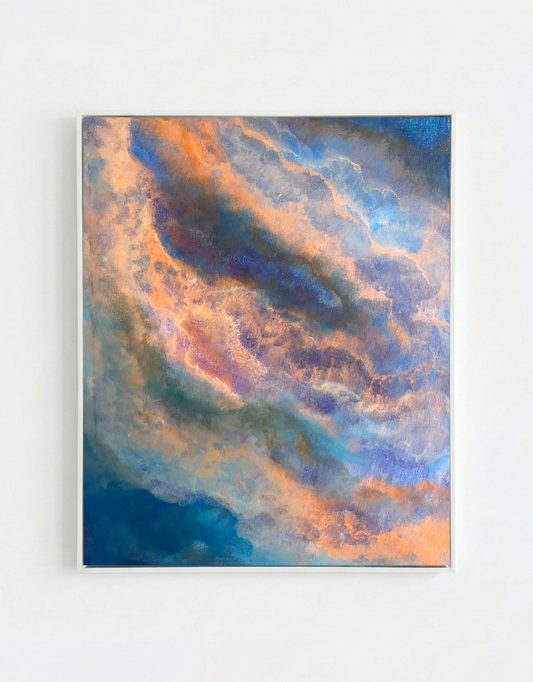
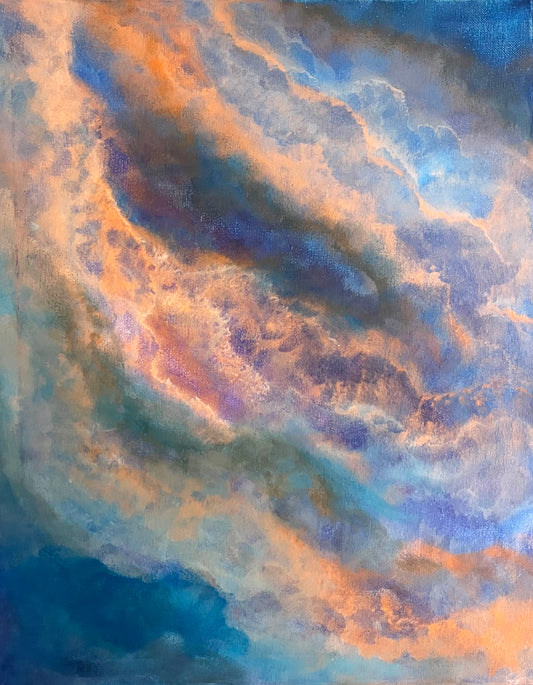
Today, merely hearing the word "Kibbutz" instinctively tightens something in our chests following the atrocities of October 7th. Sharon, who grew up in a Kibbutz in central Israel, has been narrating this unique upbringing through her art for years. Looking at her ongoing series, ״Alon Class״ (Kitath Alon) - a body of work spanning several years—feels almost surreal in the present context. Viewing these pieces now creates a profound emotional collision. It inextricably weaves together Sharon’s private childhood, the collective social fabric of the Kibbutz, and the viewer’s own nostalgia, all viewed through the heavy lens of recent history. The innocence of her past memories meets our collective present grief, charging the artwork with a new, heartbreaking resonance.

Alon class 9# | Oil on canvas, 2025
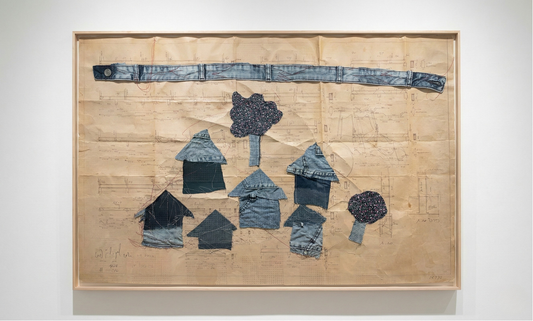
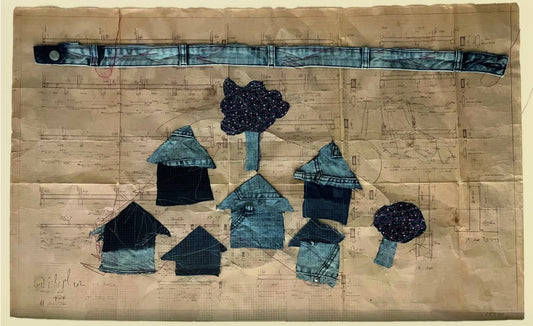
Sharon doesn’t just paint about this past; she works directly on its artifacts. She draws over the actual architectural blueprints of the Kibbutz where she grew up. She embroiders thread directly into fragile paper. She is taking the rigid structures of her history and softening them with personal, meticulous interventions.
This tension between the intimate and the national bleeds into another striking work, ״Compensation״. It can take years for an artwork to truly reveal its ultimate meaning. Sharon initially began this piece long ago as a tender study of her grandparents sharing a quiet moment. However, following the recent clashes with Iran, she felt an inescapable urge to revisit the canvas, this time painting a tight formation of fighter jets soaring overhead. The result is a striking, almost accidental reflection of the local ethos. It beautifully, and painfully, captures that familiar Israeli dissonance: the persistence of everyday life and quiet domesticity continuing under a constant, heavy backdrop.

Compensation | Acrylic on canvas, 2022
Standing in the studio, surrounded by her work, you get the uncanny sensation that Sharon knows you. She understands your most guarded, bittersweet memories without having ever met you. This is acutely felt in her ״Dvora״ series, dedicated to her grandmother. The pieces bypass the intellect and go straight for the heart, evoking a visceral longing for the simplicity of childhood. Looking at these works, you remember the slow, reassuring rhythm of a grandparent's home - the specific slant of afternoon light in their living room, the comforting predictability of their routines, and the absolute safety of being witnessed with unconditional affection. As it happens, my own late grandmother was also named Dvora, a serendipity that sealed this series in my mind as a profound masterpiece. It is an ode of yearning and deep appreciation for those mundane, everyday actions that, as children, we never realized we would miss so fiercely.

Dvora's tiger suit | Gouache on wood (framed), 2010
During my visit, Sharon spoke candidly about the sheer necessity of her practice over the past year. She shared how returning to her art became a vital mechanism for documenting, processing, and attempting to digest the trauma of October 7th. She poured that paralyzing grief and collective pain directly onto her canvases and papers. The resulting works are breathtaking yet agonizing to witness. They press so precisely on our deepest, unhealed wounds that standing before them, you find yourself momentarily suspended in disbelief- still struggling to comprehend that this overwhelming collective agony is, in fact, our waking reality.
A studio visit is an act of profound trust. I am deeply grateful to Sharon for so generously opening the door not just to her workspace, but to her raw life and most exposed memories. Through some rare artistic alchemy, she manages to dissolve the boundary between artist and audience, making you feel as though you are an active partner in her experiences, her nostalgia, and her very childhood. There is not a single piece in her body of work that fails to strike a chord; every artwork possesses the uncanny ability to reach out and intimately touch a significant, deeply personal memory within whoever is standing before it.


